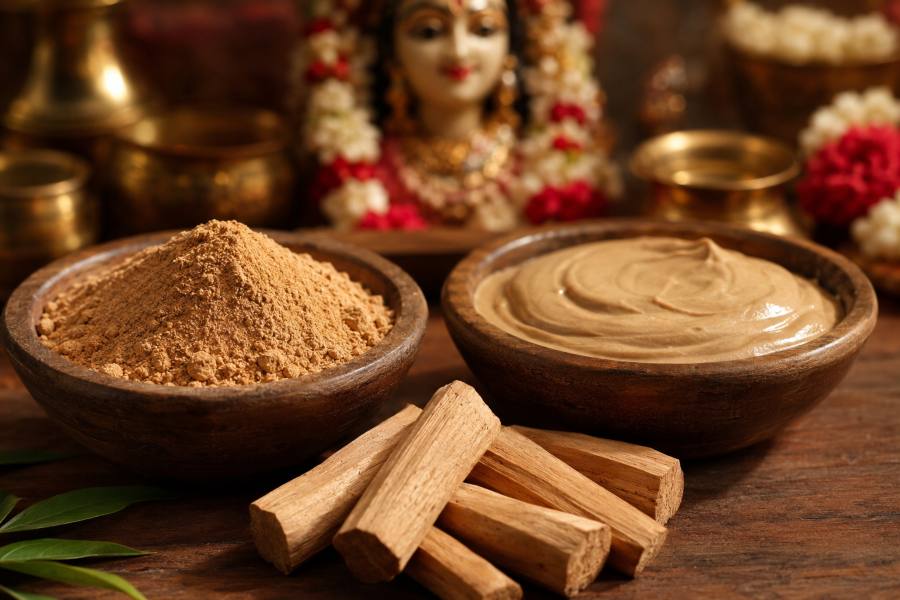
Sandalwood Powder vs Synthetic Chandan: Why Purity Matters in Devotional Practice
Imagine standing before the Deities during mangala-arati. The temple room is filled with the fragrance of incense, fresh flowers, and sacred chants. A devotee carefully prepares Chandan for offering, applying it with devotion and reverence. At first glance, all sandalwood paste may appear the same. Yet there is a significant difference between authentic sandalwood and synthetic substitutes.
Many devotees unknowingly purchase products labeled as “Chandan” without realizing they may contain artificial fragrances, chemical fillers, synthetic colors, or very little real sandalwood. While these products may imitate the appearance and scent of genuine sandalwood, they cannot replicate its natural qualities or spiritual significance.
If you are looking for authentic devotional supplies, many devotees prefer products from Mayapur Store, where traditional Vaishnava worship items are carefully sourced and prepared.
Understanding the difference between genuine sandalwood powder and synthetic Chandan is not merely a matter of product quality. It touches the heart of devotional practice itself. When offerings are made to the Lord, purity carries meaning. The intention of the devotee matters deeply, but the sincerity expressed through pure ingredients also has a special place in devotional traditions.
The Sacred History Behind Chandan
Long before modern manufacturing existed, sandalwood occupied a respected position in spiritual culture.
Across centuries of temple worship, sandalwood paste was prepared by patiently grinding natural sandalwood on a stone slab with water. This process required time, effort, and devotion. The resulting paste was offered to Deities, saints, sacred objects, and pilgrims.
Why was sandalwood chosen?
The answer goes beyond fragrance.
Traditional scriptures and devotional practices associate sandalwood with:
- Purity
- Cooling energy
- Reverence
- Auspiciousness
- Divine service
Its natural aroma creates an atmosphere conducive to meditation and worship. Unlike overpowering perfumes, genuine sandalwood possesses a subtle and calming fragrance that gently influences the mind.
This is one reason sandalwood remains a treasured element of devotional culture today.
What Exactly Is Genuine Chandan Powder?
Authentic Chandan Powder comes from real sandalwood trees, most notably varieties of sandalwood that have been valued for centuries because of their aromatic heartwood.
The process is remarkably simple:
- Sandalwood is harvested responsibly.
- The heartwood is dried.
- It is ground into fine powder.
- The powder is used directly or mixed with water to create paste.
No artificial fragrance is necessary because the wood itself naturally contains aromatic oils.
Real sandalwood powder typically exhibits:
- A soft earthy aroma
- Natural cooling properties
- Fine texture
- Light tan to beige color
- Long-lasting fragrance without harshness
Its scent does not aggressively fill a room. Instead, it develops gradually and leaves a soothing impression.
That gentle character is often one of the easiest ways to recognize authenticity.
The Rise of Synthetic Chandan
As demand increased worldwide, sandalwood became more expensive and difficult to source.
This created an opportunity for manufacturers to produce alternatives.
Synthetic Chandan products may contain:
- Artificial fragrance compounds
- Chemical aroma enhancers
- Synthetic oils
- Coloring agents
- Wood fillers
- Powdered substitutes
Some products contain small amounts of sandalwood combined with synthetic ingredients. Others contain no real sandalwood at all.
The packaging may still display images of sandalwood trees, traditional symbols, or spiritual artwork, leading buyers to assume they are purchasing pure Chandan.
In many cases, consumers only discover the difference after comparing the aroma, texture, and performance of genuine sandalwood with synthetic versions.
Why Synthetic Fragrance Is Not the Same Thing
One of the biggest misconceptions is that matching the smell means matching the substance.
It does not.
Consider the difference between a fresh rose and a synthetic rose-scented air freshener.
Both may smell similar initially, but they are fundamentally different.
The same principle applies to Chandan.
Synthetic fragrance is engineered to imitate sandalwood aroma. Genuine sandalwood naturally produces its scent through organic compounds developed over years of growth within the tree.
Because of this distinction:
- Artificial fragrances often smell sharper.
- Synthetic scents may fade strangely.
- Chemical notes can become noticeable over time.
- The fragrance experience lacks the depth of natural sandalwood.
Many experienced devotees can identify genuine sandalwood almost immediately because its aroma feels softer, richer, and more balanced.
Devotion Is About Intention—But Ingredients Still Matter
A common question arises:
“If devotion comes from the heart, why does the purity of Chandan matter?”
This is an important point.
In devotional traditions, sincerity remains primary. A devotee with genuine devotion but limited resources can offer simple items with great spiritual value.
At the same time, scriptures repeatedly encourage offering one’s best to the Lord.
Think about serving an honored guest.
You may offer food with love, but you would naturally try to provide the freshest and highest-quality ingredients available to you. The effort reflects respect and affection.
The same principle applies in deity worship.
Choosing pure sandalwood instead of synthetic substitutes can be viewed as an expression of care and reverence.
It is not about luxury.
It is about offering something authentic.
The Hidden Problem with Artificial Additives
Many devotees focus exclusively on fragrance while overlooking another concern: additives.
Synthetic Chandan products may contain ingredients that are not immediately obvious.
Potential additions include:
- Artificial stabilizers
- Preservatives
- Synthetic dyes
- Industrial fragrance compounds
- Binding agents
Not every synthetic product contains harmful substances, but ingredient transparency is often limited.
For temple worship, devotees generally prefer products that remain as close to nature as possible.
Natural ingredients provide confidence about what is being placed on Deities, sacred objects, or the body during tilak application.
The fewer unknowns involved, the easier it becomes to maintain traditional standards of worship.
Why Genuine Sandalwood Feels Different During Worship
Ask devotees who regularly use authentic sandalwood, and many describe a noticeable difference.
The distinction is not always dramatic.
Instead, it appears in subtle ways.
The fragrance feels calmer.
The paste spreads more naturally.
The aroma remains pleasant without becoming overwhelming.
The worship experience often feels more connected to traditional practices.
These observations may sound subjective, yet they explain why genuine sandalwood continues to be preferred even when synthetic alternatives are cheaper.
The experience itself carries value.
The Economics Behind Fake Chandan
Many people wonder why counterfeit or synthetic Chandan products are so common.
The answer is straightforward.
Authentic sandalwood is expensive.
A sandalwood tree requires many years to mature. Responsible cultivation, harvesting regulations, processing, transportation, and quality control all contribute to cost.
Synthetic fragrance, by comparison, can be manufactured quickly and cheaply.
For manufacturers, the financial incentive is obvious.
For consumers, however, the lower price can create confusion.
When one product costs significantly less than genuine sandalwood, it is worth asking:
- What ingredients were substituted?
- How much real sandalwood is actually present?
- What is creating the fragrance?
- Is the product suitable for sacred offerings?
Price alone does not determine authenticity, but extremely inexpensive “sandalwood” products often warrant closer inspection.
How to Identify Authentic Chandan Powder
While laboratory testing provides the most reliable verification, devotees can look for several practical indicators.
Examine the Aroma Carefully
Real sandalwood fragrance tends to be:
- Warm
- Earthy
- Soft
- Natural
- Long-lasting
Artificial products frequently smell:
- Extremely strong
- Perfume-like
- Sharp
- Chemically sweet
If the scent seems overwhelming immediately after opening the package, caution is warranted.
Look at the Color
Natural sandalwood powder generally displays subtle tones.
Very bright or unusually uniform coloring may indicate additives or artificial enhancement.
Read Ingredient Information
Quality suppliers are usually transparent about ingredients.
Look for:
- Pure sandalwood powder
- Minimal processing
- Clear sourcing information
Avoid products with long ingredient lists that do not clearly explain their contents.
Observe Texture
Authentic sandalwood powder generally feels smooth and fine.
Excessively coarse textures or unusual residues can indicate fillers.
What Ancient Traditions Can Teach Modern Devotees
Modern spiritual life often emphasizes convenience.
Instant products, pre-made pastes, and mass-produced worship supplies are widely available.
Convenience has benefits, but traditional practices remind us that preparation itself can be devotional.
When devotees historically ground sandalwood by hand, they invested effort before making the offering.
The process encouraged mindfulness.
Every movement became part of worship.
Even if modern devotees use prepared sandalwood powder, understanding this tradition helps preserve the spirit behind the offering.
Authenticity is not simply a product characteristic.
It is a reflection of attitude.
When purity is valued, devotion naturally becomes more intentional.
The Spiritual Meaning of Purity in Offerings
When discussing Chandan Powder, it is easy to focus on fragrance, texture, or authenticity. Yet the deeper question is this: why has purity always occupied such an important place in devotional traditions?
The answer lies in the relationship between the devotee and the Divine.
In devotional practice, an offering is never merely an object. A flower is not just a flower. Water is not simply water. Sandalwood paste is not only a fragrant substance. Each item becomes a vehicle for expressing devotion.
This is why many devotees pay close attention to what they offer.
Purity is often associated with three things:
- Respect
- Mindfulness
- Sincerity
Imagine receiving a handmade gift from someone who genuinely cares about you. The monetary value may be small, yet the thoughtfulness behind it gives the gift significance.
Similarly, pure Chandan Powder reflects a conscious effort to offer something authentic rather than settling for an imitation.
The external offering alone does not determine spiritual value. However, the care invested in selecting pure ingredients becomes part of the devotional mood itself.
Why Vaishnava Traditions Continue to Value Genuine Chandan
Within Vaishnava culture, sandalwood has remained deeply respected for generations.
It is commonly used for:
- Deity worship
- Festival ceremonies
- Sacred markings
- Temple offerings
- Special observances
The cooling nature of sandalwood has symbolic importance as well. Devotional literature often describes spiritual life as bringing peace to the restless mind. Genuine sandalwood naturally aligns with that symbolism.
During warm seasons, many temples prepare sandalwood paste for the Deities as a loving service. The offering is practical, beautiful, and spiritually meaningful at the same time.
For countless devotees, the fragrance of authentic Chandan immediately evokes memories of temple visits, kirtans, festivals, and moments of prayer.
Synthetic substitutes may imitate the scent, but they rarely recreate the same connection.
The Emotional Power of Sacred Fragrance
Among all human senses, smell possesses a unique ability to trigger memory.
A single fragrance can instantly transport someone back to a particular place or experience.
Many devotees know this feeling well.
The aroma of authentic sandalwood often brings memories of:
- Temple darshan
- Festival celebrations
- Spiritual teachers
- Pilgrimage experiences
- Childhood worship traditions
This emotional connection explains why genuine sandalwood continues to hold such value.
The fragrance is not merely pleasant.
It becomes part of one’s spiritual journey.
Artificial scents may reproduce certain notes, but they often lack the depth and complexity that create lasting associations.
Natural sandalwood develops gradually. Its aroma unfolds over time rather than overwhelming the senses immediately.
That subtle quality is one reason devotees continue to treasure it.
When Cheap Alternatives Become Expensive
At first glance, synthetic Chandan appears economical.
A devotee may see two products:
- One made from authentic sandalwood.
- One priced significantly lower.
The cheaper option can seem attractive.
Yet long-term value tells a different story.
Synthetic products often require:
- More frequent replacement
- Larger quantities for similar results
- Repeated purchases due to lower quality
Authentic Chandan Powder, on the other hand, tends to provide a richer and more satisfying experience with smaller amounts.
Many experienced devotees eventually discover that investing in genuine sandalwood saves frustration and delivers better value over time.
Price should never be the only factor guiding devotional purchases.
Quality, authenticity, and suitability for worship deserve equal consideration.
The Environmental Side of the Conversation
The discussion surrounding Chandan Powder is not only spiritual. It is also environmental.
Sandalwood trees are valuable natural resources.
Because of high demand, irresponsible harvesting has created challenges in some regions.
This reality highlights another important distinction between authentic suppliers and questionable manufacturers.
Responsible sourcing involves:
- Sustainable cultivation
- Legal harvesting practices
- Proper documentation
- Long-term environmental stewardship
Devotees increasingly seek suppliers who support ethical sourcing rather than exploiting natural resources.
This approach aligns beautifully with spiritual principles.
Respect for creation naturally includes respect for the environment.
Choosing responsibly sourced sandalwood helps preserve these treasured trees for future generations.
Common Myths About Synthetic Chandan
The marketplace contains many misconceptions regarding sandalwood products.
Let’s examine a few of the most common.
Myth #1: If It Smells Like Sandalwood, It Is Sandalwood
This is perhaps the most widespread misunderstanding.
Modern fragrance technology can mimic many natural scents.
A product may smell similar to sandalwood while containing little or no actual sandalwood.
Fragrance alone does not confirm authenticity.
Myth #2: All Chandan Powders Are Basically the Same
They are not.
Differences can exist in:
- Purity
- Source material
- Processing methods
- Aroma quality
- Spiritual suitability
Two products labeled “Chandan” may be entirely different in composition.
Myth #3: Synthetic Products Are Always Identical to Natural Ones
Artificial replication can imitate certain characteristics, but it cannot perfectly reproduce the complexity of natural sandalwood.
Nature creates layers of aroma that are difficult to duplicate completely.
Myth #4: Purity Only Matters for Priests
Every devotee can appreciate purity.
Whether someone performs elaborate Deity worship or simple daily prayer at home, authentic ingredients contribute to a more meaningful devotional experience.
Questions Every Buyer Should Ask
Before purchasing Chandan Powder, consider asking a few practical questions.
Is Real Sandalwood Clearly Mentioned?
Authentic products generally state this clearly.
Vague descriptions should encourage further investigation.
Does the Seller Explain the Source?
Trustworthy suppliers usually provide information about origin and quality standards.
Are Ingredients Transparent?
Transparency often indicates confidence in the product.
Hidden or unclear ingredients deserve caution.
Does the Price Make Sense?
Extremely cheap sandalwood products should raise questions.
Authentic sandalwood involves genuine production costs.
Is the Product Intended for Devotional Use?
Products designed specifically for worship often receive greater attention regarding purity and traditional preparation.
The Difference Between Fragrance and Presence
One of the most fascinating aspects of genuine sandalwood is that its impact extends beyond smell.
Many devotees describe authentic Chandan as having a certain presence.
That may sound unusual, but anyone who has compared real sandalwood with synthetic alternatives often understands the distinction immediately.
The experience feels more natural.
More balanced.
More refined.
Rather than demanding attention, authentic sandalwood quietly enhances the atmosphere.
It complements worship rather than dominating it.
This subtlety is part of its enduring appeal.
Why Authenticity Matters More Than Ever
Today’s marketplace is crowded with products competing for attention.
Packaging has become sophisticated.
Marketing claims are everywhere.
Terms like “premium,” “natural,” and “traditional” appear on countless labels.
As a result, devotees must become more discerning than ever before.
Authenticity matters because devotional practice deserves honesty.
When a product claims to be sandalwood, devotees have a reasonable expectation that it genuinely contains sandalwood.
When labels become misleading, trust suffers.
Choosing reputable suppliers helps preserve integrity within the devotional marketplace.
It also encourages manufacturers to maintain higher standards.
Bringing Ancient Traditions Into Modern Homes
Not everyone lives near a temple.
Many devotees practice bhakti from apartments, houses, dormitories, or workplaces around the world.
Authentic Chandan Powder offers a simple way to bring traditional worship into daily life.
A small amount of genuine sandalwood can be used for:
- Home altars
- Festival observances
- Sacred ceremonies
- Personal devotional routines
- Tilak preparation
These practices help maintain a connection with centuries of spiritual heritage.
Every time authentic sandalwood is offered, that tradition continues.
How Purity Influences the Worship Experience
Purity affects more than the physical object being offered.
It also shapes the mindset of the devotee.
When someone carefully selects genuine Chandan Powder, they are making a conscious decision.
They are choosing:
- Authenticity over imitation
- Quality over convenience
- Tradition over shortcuts
That choice influences the mood with which the offering is made.
Devotional life is built upon countless small decisions.
Many of those decisions appear insignificant from the outside.
Yet together they create a culture of attentiveness and reverence.
Pure sandalwood becomes one expression of that culture.
Final Thoughts: Choosing What You Offer
The debate between genuine sandalwood and synthetic Chandan is not ultimately about fragrance.
It is about authenticity.
Real Chandan Powder carries a legacy shaped by centuries of devotional use, temple worship, and spiritual tradition. Its natural aroma, purity, and connection to sacred practices make it far more than a cosmetic or aromatic product.
Synthetic alternatives may offer convenience and lower prices, but they cannot fully replicate what genuine sandalwood represents.
For devotees, purity matters because offerings carry meaning. The ingredients chosen for worship reflect intention, respect, and devotion. While sincere devotion remains the heart of spiritual practice, selecting authentic Chandan Powder allows that devotion to be expressed in a tangible way.
When standing before the Deities, preparing an altar, or applying sacred markings, the goal is not perfection. The goal is loving service.
Authentic sandalwood helps support that service with the simplicity, purity, and natural beauty that have inspired devotees for generations.
Frequently Asked Questions
Is synthetic Chandan harmful for worship?
Many devotees prefer genuine sandalwood because it aligns more closely with traditional devotional standards. Synthetic products vary widely in composition and quality.
How can I identify genuine Chandan Powder?
Look for transparent ingredient lists, reputable suppliers, natural aroma characteristics, and clear sourcing information.
Why is authentic sandalwood more expensive?
Sandalwood trees require many years to mature, and responsible cultivation, harvesting, processing, and distribution all contribute to the final cost.
Can genuine Chandan Powder be used for tilak?
Yes. Authentic sandalwood has traditionally been used in various devotional practices, including sacred applications and offerings.
Does purity really matter if devotion comes from the heart?
Devotion remains primary. However, many spiritual traditions encourage offering the best available items as an expression of respect and love.
What is the biggest difference between genuine and synthetic Chandan?
The primary difference is authenticity. Genuine Chandan Powder comes from real sandalwood, while synthetic products rely on artificial fragrances and substitute ingredients to imitate the experience.


