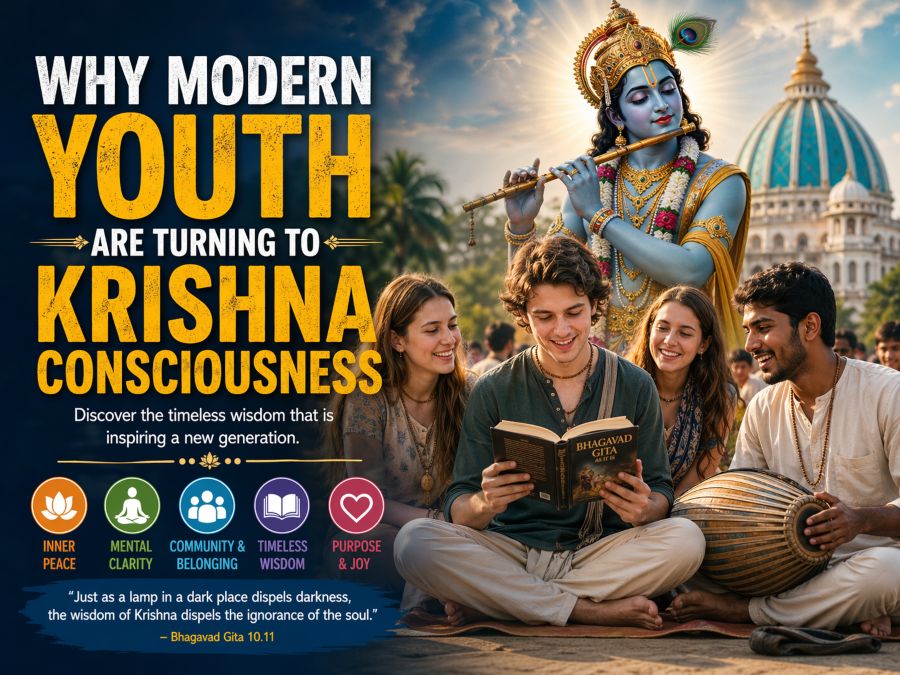
Why Modern Youth Are Turning to Krishna Consciousness
In a world defined by speed, distraction, and constant comparison, a surprising spiritual shift is unfolding. Across cities, campuses, and even digital spaces, modern youth are increasingly turning toward Krishna consciousness—a timeless spiritual path rooted in ancient Vedic wisdom. This movement is not merely a trend; it is a response to a deep inner calling that modern lifestyles often fail to satisfy.
Within the first moments of exploring spirituality, many seekers today are discovering profound insights through Mayapur Store Krishna consciousness teachings, which provide accessible, authentic knowledge drawn from centuries-old traditions. These teachings are not abstract philosophy; they are practical tools for navigating modern life with clarity, purpose, and inner peace.
The Crisis of Meaning in Modern Life
Today’s youth are more connected than ever before—yet paradoxically, they feel increasingly isolated. Social media platforms promise validation but often deliver anxiety. Career paths offer financial security but rarely fulfill emotional or spiritual needs.
This generation is facing what psychologists call a “crisis of meaning.” Questions like “Why am I here?”, “What is success?”, and “What truly matters?” are no longer philosophical luxuries—they are urgent concerns.
Krishna consciousness addresses this void directly. It does not ask individuals to abandon the world but invites them to understand their place within it. By presenting life as a spiritual journey rather than a material race, it offers a framework that resonates deeply with those searching for purpose.
The Appeal of Simplicity in a Complex World
Modern life is complicated—packed schedules, digital overload, and constant decision-making create mental exhaustion. Krishna consciousness, by contrast, offers simplicity.
At its core, the philosophy emphasizes:
- Chanting the holy names
- Living a sattvic (pure) lifestyle
- Practicing devotion (bhakti)
- Maintaining moral discipline
These practices strip away unnecessary complexity and help individuals reconnect with their natural state of consciousness. For youth overwhelmed by endless choices, this simplicity feels liberating.
A Scientific Approach to Spirituality
One of the key reasons modern youth are drawn to Krishna consciousness is its logical and structured approach. Unlike blind faith systems, it encourages inquiry, discussion, and understanding.
Texts like the Bhagavad Gita present spiritual concepts in a rational framework:
- The distinction between body and soul
- The law of karma
- The cycle of birth and rebirth
- The nature of consciousness
Young minds, trained in analytical thinking, find this approach intellectually satisfying. It bridges the gap between science and spirituality, making it relevant in today’s knowledge-driven world.
The Power of Mantra Meditation
Mental health challenges such as anxiety, depression, and burnout are increasingly common among youth. Krishna consciousness offers a powerful yet simple solution: mantra meditation.
Chanting the Hare Krishna mantra is not just a ritual—it is a transformative practice. Repetition of the mantra:
- Calms the mind
- Reduces stress
- Enhances focus
- Cultivates inner joy
Unlike temporary escapes like entertainment or substance use, mantra meditation provides sustainable mental clarity. Many young practitioners report a noticeable improvement in emotional stability after adopting this practice.
Community and Belonging
One of the most compelling aspects of Krishna consciousness is its strong sense of community. In a world where relationships are often transactional, this movement offers genuine connection.
Temples, gatherings, and festivals create spaces where individuals can:
- Share experiences
- Learn together
- Support one another spiritually
For youth who feel disconnected from traditional family or social structures, this sense of belonging is deeply comforting. It replaces loneliness with meaningful association.
Freedom from Material Pressure
Modern society often defines success through wealth, status, and external achievements. This creates immense pressure, especially among young people trying to meet societal expectations.
Krishna consciousness challenges this narrative. It teaches that true success lies in self-realization and spiritual growth, not material accumulation.
This shift in perspective:
- Reduces comparison and competition
- Encourages contentment
- Promotes inner satisfaction
Youth who adopt this philosophy often experience relief from the relentless pressure to “prove” themselves in the material world.
Read Also:- Krishna Janma
Ethical Living and Conscious Choices
Another reason for the growing attraction is the emphasis on ethical living. Krishna consciousness promotes values such as:
- Non-violence (ahimsa)
- Truthfulness
- Clean living
- Compassion
Practices like vegetarianism and mindful consumption align closely with modern concerns about sustainability and animal welfare. This makes the philosophy not only spiritually relevant but also socially conscious.
Influence of Global Movements and Accessibility
The global expansion of Krishna consciousness has made it more accessible than ever. Books, lectures, online platforms, and social media have brought these teachings to a wider audience.
Young people today can:
- Watch spiritual talks online
- Read translated scriptures
- Join virtual communities
- Access guided practices
This accessibility removes barriers and allows individuals to explore spirituality at their own pace.
The Role of Authentic Teachers and Literature
Authenticity matters deeply to modern youth. They are skeptical of superficial spirituality and seek genuine guidance.
Krishna consciousness offers a rich tradition of authentic teachers and literature that have stood the test of time. These teachings are not newly invented—they are preserved knowledge passed down through generations.
This authenticity builds trust and encourages deeper engagement.
A Lifestyle, Not Just a Philosophy
Unlike many belief systems that remain theoretical, Krishna consciousness is a complete lifestyle. It influences:
- Daily routines
- Food habits
- Thought patterns
- Relationships
This holistic approach allows individuals to integrate spirituality into every aspect of life, rather than treating it as a separate activity.
For youth seeking consistency and alignment, this is particularly appealing.
Emotional Healing Through Devotion
Modern youth often carry emotional wounds—broken relationships, identity struggles, and personal insecurities. Krishna consciousness offers a path of emotional healing through devotion.
Bhakti (devotional service) allows individuals to:
- Express love in a pure form
- Develop humility
- Experience unconditional acceptance
This emotional dimension is powerful. It transforms spirituality from an intellectual pursuit into a deeply personal experience.
The Joy of Kirtan and Festivals
Another attractive aspect is the joyful expression of spirituality. Kirtan (devotional singing) and festivals create vibrant, uplifting experiences.
These gatherings are:
- Energetic
- Inclusive
- Spiritually enriching
For youth accustomed to entertainment-driven culture, this joyful approach provides a meaningful alternative that nourishes both heart and soul.
Detachment Without Renunciation
A common misconception is that spirituality requires renouncing the world. Krishna consciousness offers a balanced perspective.
It teaches:
- Engage with the world, but remain detached
- Perform duties with devotion
- Use material resources responsibly
This practical approach allows youth to pursue careers, relationships, and goals while maintaining spiritual awareness.
Identity and Self-Discovery
In an age of identity confusion, Krishna consciousness provides clarity. It defines identity not by external labels but by the eternal nature of the soul.
Understanding oneself as a spiritual being:
- Reduces existential anxiety
- Strengthens self-worth
- Provides direction
This clarity is invaluable for young individuals navigating complex life choices.
Resistance to Consumer Culture
Modern youth are increasingly questioning consumerism. Endless consumption often leads to emptiness rather than fulfillment.
Krishna consciousness promotes:
- Minimalism
- Gratitude
- Conscious living
This aligns with the growing desire to live intentionally rather than impulsively.
Digital Detox Through Spiritual Practice
Constant screen exposure is a major challenge for today’s generation. Spiritual practices offer a natural form of digital detox.
Activities like:
- Chanting
- Reading scriptures
- Attending satsang
help individuals disconnect from digital noise and reconnect with themselves.
A Universal Message
Krishna consciousness is not limited by nationality, culture, or background. Its universal message appeals to a global audience.
It emphasizes:
- Unity of all beings
- Equality at the spiritual level
- Love as the highest principle
This inclusivity resonates strongly with youth who value diversity and global connection.
The Role of Experience Over Belief
Modern youth prioritize experience over blind belief. Krishna consciousness encourages personal realization.
Practitioners are invited to:
- Experiment with chanting
- Observe changes in consciousness
- Reflect on their experiences
This experiential approach builds conviction naturally, without coercion.
Addressing Mental Health Naturally
While therapy and medication have their place, many young people are exploring natural methods for mental well-being.
Krishna consciousness offers:
- Structured routines
- Mindfulness practices
- Emotional grounding
These elements contribute to long-term mental stability.
Influence of Peer Networks
As more youth adopt this path, peer influence plays a significant role. Seeing friends or influencers embrace Krishna consciousness makes it more relatable and approachable.
This organic spread is one of the reasons for its rapid growth.
Conclusion: A Return to Timeless Wisdom
The growing attraction of modern youth toward Krishna consciousness is not accidental. It reflects a deeper shift—a movement away from superficial living toward meaningful existence.
In a world filled with noise, Krishna consciousness offers clarity. In a culture of excess, it offers simplicity. In an age of confusion, it offers truth.
For today’s youth, this path is not about escaping reality—it is about understanding it fully.
As this spiritual awakening continues to spread, it is becoming clear that ancient wisdom still holds the answers to modern problems. And for many young seekers, Krishna consciousness is not just a philosophy—it is a way of life that brings lasting peace, purpose, and fulfillment.

 Blue Moon