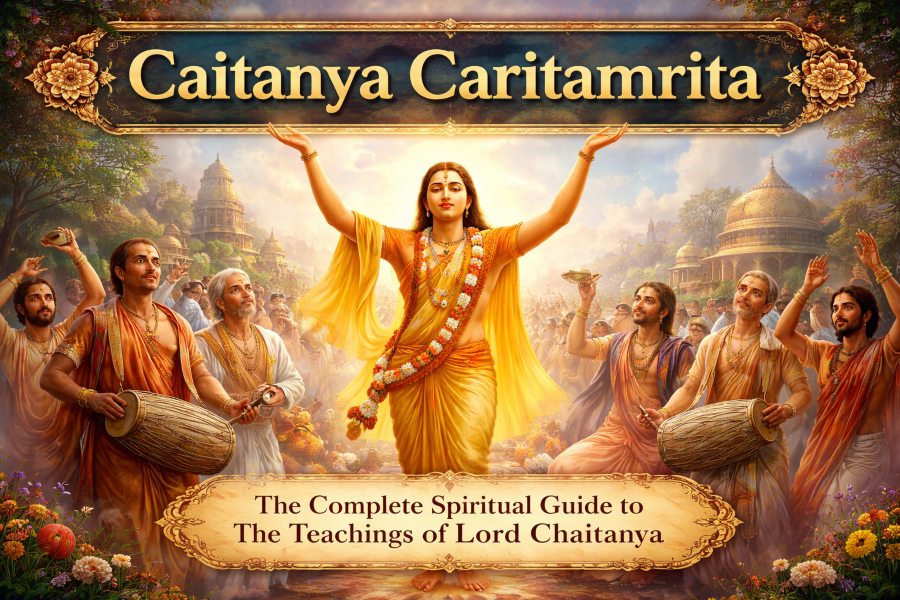
Caitanya Caritamrita: A Complete Spiritual Guide to the Teachings of Lord Chaitanya
Among the great spiritual texts of India, Caitanya Caritamrita stands as one of the most profound works explaining the philosophy of divine love and devotion. Written in the 16th century by Krishnadas Kaviraj Goswami, this sacred biography beautifully narrates the life, teachings, and spiritual mission of Sri Chaitanya Mahaprabhu. For followers of the bhakti tradition, the text is not merely historical literature; it is a spiritual roadmap guiding the soul toward a deeper relationship with Krishna.
Those seeking to understand the essence of devotional service often begin their journey through the sacred pages of Caitanya Caritamrita, a text that reveals how pure love of God can transform human life. The scripture explains not only the divine pastimes of Lord Chaitanya but also the philosophical foundation of Gaudiya Vaishnavism. Through stories, dialogues, and spiritual insights, it presents a living example of how devotion can awaken divine consciousness.
The significance of this text goes beyond theology. It offers practical guidance for spiritual seekers living in the modern world. Its message is simple yet profound: chanting the holy names of Krishna and practicing sincere devotion can bring peace, clarity, and spiritual fulfillment.
For centuries, saints, scholars, and devotees have studied this masterpiece to deepen their understanding of bhakti yoga. Even today, it continues to inspire millions of readers who wish to explore the true meaning of spiritual love and divine connection.
Background and Authorship of Caitanya Caritamrita
The historical foundation of Caitanya Caritamrita is deeply connected with the devotional movement that spread throughout India during the 15th and 16th centuries. This period witnessed a spiritual renaissance driven by saints who emphasized devotion over ritualistic formalities. Among them, Sri Chaitanya Mahaprabhu emerged as a central figure who transformed the understanding of bhakti.
Krishnadas Kaviraj Goswami, the author of Caitanya Caritamrita, composed the text in Vrindavan when he was already advanced in age. Despite his physical limitations, he wrote the scripture with remarkable clarity and devotion. His work was based on earlier biographies of Lord Chaitanya, personal accounts of close associates, and the teachings preserved by the Goswamis of Vrindavan.
The text is written primarily in Bengali with many Sanskrit verses. This unique combination allowed the teachings to reach both scholars and ordinary devotees. The language reflects deep philosophical insight while remaining emotionally expressive and spiritually uplifting.
Historically, the book played a vital role in preserving the authentic teachings of Lord Chaitanya. It documented the theological foundation of the Gaudiya Vaishnava tradition, particularly the philosophy of Achintya Bheda Abheda, which explains the simultaneous oneness and difference between the individual soul and the Supreme Lord.
Through its detailed narratives and philosophical discussions, the scripture helped establish the spiritual identity of the devotional movement centered around Krishna bhakti. Today, it remains one of the most authoritative texts for understanding the life and mission of Sri Chaitanya Mahaprabhu.
The Structure and Organization of the Sacred Text
One of the remarkable aspects of Caitanya Caritamrita is its carefully organized structure. The book is divided into three major sections, each focusing on different stages of Lord Chaitanya’s life and spiritual teachings.
The first section, known as Adi-lila, introduces the theological foundations of the text. It explains the identity of Lord Chaitanya as the combined form of Radha and Krishna and describes the purpose of His appearance in the world. This part also introduces many important associates who played key roles in spreading the message of devotion.
The second section, Madhya-lila, is the largest and most detailed portion of the scripture. It narrates Lord Chaitanya’s travels across India and his interactions with scholars, devotees, and spiritual leaders. These discussions contain profound philosophical insights that clarify the principles of bhakti yoga and devotional service.
The final section, Antya-lila, focuses on the later years of Lord Chaitanya’s life in Jagannath Puri. This part highlights His intense spiritual emotions and divine experiences while absorbed in the love of Krishna. The narratives reveal the depth of devotional ecstasy that characterizes the highest stage of bhakti.
Together, these three sections create a complete spiritual biography that combines history, philosophy, and devotional poetry. The structure allows readers to gradually understand both the personality of Lord Chaitanya and the deeper meaning of his teachings.
Core Philosophical Teachings in Caitanya Caritamrita
At the heart of Caitanya Caritamrita lies a powerful spiritual philosophy centered on divine love. The text emphasizes that the ultimate goal of life is to awaken pure love for Krishna through devotional service.
One of the central teachings presented in the scripture is the philosophy of Achintya Bheda Abheda, meaning “inconceivable simultaneous oneness and difference.” According to this principle, the individual soul is both one with and different from the Supreme Lord. This relationship explains how the soul can maintain its individuality while remaining eternally connected to God.
Another important teaching is the practice of nama sankirtana, or the congregational chanting of the holy names of Krishna. Lord Chaitanya taught that chanting the Hare Krishna mantra is the most effective spiritual practice in the present age. Through sincere chanting, the heart becomes purified and spiritual consciousness gradually awakens.
The text also highlights the importance of humility, compassion, and service to others. True devotion is not measured by external rituals but by the sincerity of one’s heart and the desire to serve the Supreme.
In addition, the scripture emphasizes the role of spiritual guidance. Associating with devotees and learning from genuine spiritual teachers helps individuals stay focused on their spiritual path.
These teachings continue to influence spiritual seekers around the world, offering practical methods for cultivating inner peace and divine love.
The Life and Mission of Lord Chaitanya Mahaprabhu
The life of Sri Chaitanya Mahaprabhu is the central theme of Caitanya Caritamrita. Born in Navadvipa in 1486, He was known in his early years as Nimai Pandit, a brilliant scholar and teacher. Despite his intellectual achievements, his life took a profound spiritual turn that changed the course of devotional history.
After experiencing a deep spiritual awakening, Lord Chaitanya dedicated his life to spreading the message of devotion to Krishna. He emphasized that love for God should be expressed through chanting, singing, and remembering the divine names of the Lord.
His movement attracted followers from diverse backgrounds, including scholars, saints, and ordinary people. What made his mission unique was the emphasis on universal spiritual equality. He taught that anyone, regardless of social status or education, could attain spiritual realization through sincere devotion.
Lord Chaitanya traveled extensively throughout India, sharing his message of love and compassion. During these journeys, he engaged in profound philosophical discussions with scholars and inspired countless individuals to adopt the path of bhakti.
In his later years, he resided in Jagannath Puri, where he remained absorbed in deep spiritual emotions and devotion to Krishna. These final years represent the highest expression of divine love described in the text.
Spiritual Relevance of Caitanya Caritamrita in the Modern World
Although Caitanya Caritamrita was written several centuries ago, its message remains highly relevant in the modern age. Today’s world often emphasizes material success, competition, and constant activity, leaving many people searching for deeper meaning and spiritual fulfillment.
The teachings of Lord Chaitanya offer a refreshing perspective that prioritizes inner transformation over external achievements. The scripture explains that real happiness comes from reconnecting with our spiritual identity and cultivating love for the Supreme.
One of the most practical aspects of the text is its emphasis on simple spiritual practices. Chanting, meditation, and devotional service do not require complicated rituals or extensive resources. Anyone can incorporate these practices into daily life regardless of their circumstances.
In addition, the philosophy encourages compassion, humility, and respect for all living beings. These values contribute to healthier relationships and a more harmonious society.
Many readers find that studying this sacred text brings clarity, emotional balance, and a sense of purpose. Its teachings provide timeless guidance for navigating the challenges of modern life while remaining connected to spiritual truth.
Why Studying Caitanya Caritamrita Can Transform Your Spiritual Journey
Reading Caitanya Caritamrita is often described as a transformative spiritual experience. The text goes beyond intellectual knowledge and touches the heart of the reader through its powerful descriptions of divine love.
One of the reasons for its impact is the sincerity of its author. Krishnadas Kaviraj Goswami wrote with deep devotion and humility, acknowledging the spiritual greatness of Lord Chaitanya and his associates. This authenticity allows readers to feel the spiritual atmosphere present in the narratives.
The scripture also provides a comprehensive understanding of bhakti yoga. It explains how devotion develops gradually through hearing, chanting, remembrance, and service. These practices help individuals purify their consciousness and strengthen their connection with the divine.
Another transformative aspect is the emphasis on community and spiritual association. The text highlights the importance of surrounding oneself with devotees who encourage spiritual growth.
For many readers, the book becomes more than literature—it becomes a guide for living a meaningful and spiritually centered life.
Conclusion: A Spiritual Masterpiece for Devotees and Seekers
Caitanya Caritamrita remains one of the most influential spiritual texts in the bhakti tradition. Through its detailed narration of Lord Chaitanya’s life and teachings, it offers a profound understanding of divine love and devotional practice.
The scripture combines history, philosophy, and spiritual emotion in a way that speaks to both scholars and everyday readers. Its message encourages individuals to cultivate humility, compassion, and sincere devotion to God.
For anyone seeking spiritual depth, inner peace, and a deeper understanding of bhakti yoga, this sacred text provides invaluable guidance. Even centuries after its composition, its teachings continue to inspire countless people around the world.
By studying and reflecting on its wisdom, readers can begin a transformative journey toward spiritual awareness and divine love.
Frequently Asked Questions (FAQ)
1. What is Caitanya Caritamrita?
Caitanya Caritamrita is a sacred Vaishnava scripture written by Krishnadas Kaviraj Goswami in the 16th century. It describes the life, teachings, and spiritual mission of Sri Chaitanya Mahaprabhu, who is considered the combined incarnation of Radha and Krishna in Gaudiya Vaishnavism. The text is both a biography and a theological work explaining the philosophy of bhakti yoga and devotional service. Through stories, philosophical discussions, and devotional poetry, it presents the path of divine love and chanting the holy names of Krishna.
2. Who wrote Caitanya Caritamrita?
Caitanya Caritamrita was written by Krishnadas Kaviraj Goswami, a respected saint and scholar of the Gaudiya Vaishnava tradition. He composed the text in Vrindavan when he was in advanced age. The work was based on earlier writings, eyewitness accounts from Lord Chaitanya’s associates, and the teachings of the Six Goswamis of Vrindavan. His deep devotion and scholarship helped preserve the authentic teachings of Lord Chaitanya for future generations.
3. What are the main sections of Caitanya Caritamrita?
The text is divided into three main sections: Adi-lila, Madhya-lila, and Antya-lila.
- Adi-lila explains the theological background and divine identity of Lord Chaitanya.
- Madhya-lila describes his travels, teachings, and discussions with scholars and devotees.
- Antya-lila focuses on the final years of his life in Jagannath Puri, highlighting his deep spiritual emotions and devotion to Krishna.
These three sections together form a complete spiritual biography.
4. What philosophy does Caitanya Caritamrita teach?
One of the central philosophies explained in the text is Achintya Bheda Abheda, which means “inconceivable simultaneous oneness and difference.” According to this philosophy, the individual soul is both one with and different from the Supreme Lord. The scripture teaches that the ultimate goal of life is to develop pure love for Krishna through devotion, humility, and spiritual practice.
5. Why is Caitanya Caritamrita important in Gaudiya Vaishnavism?
Caitanya Caritamrita is considered one of the most authoritative texts in the Gaudiya Vaishnava tradition. It explains the life and teachings of Lord Chaitanya, who introduced the practice of congregational chanting of the Hare Krishna mantra. The book also establishes the theological foundation of the movement and explains the highest form of devotional love known as prema-bhakti.
6. How does Caitanya Caritamrita guide spiritual practice?
The text emphasizes simple yet powerful spiritual practices such as chanting the holy names of Krishna, associating with devotees, studying sacred texts, and serving others with humility. These practices help purify the heart and awaken spiritual awareness. The teachings encourage devotees to cultivate compassion, sincerity, and dedication in their daily lives.
7. Can beginners read Caitanya Caritamrita?
Yes, beginners can read Caitanya Caritamrita, although it is a deep philosophical text. Many editions include explanations and commentaries that help readers understand the teachings more clearly. For those new to spiritual literature, reading gradually and reflecting on the teachings can make the experience more meaningful and inspiring.
8. What makes Caitanya Caritamrita unique among spiritual books?
What makes Caitanya Caritamrita unique is its combination of biography, philosophy, and devotional poetry. It does not simply describe spiritual ideas; it illustrates them through the life of Lord Chaitanya and his associates. The text reveals how divine love can be experienced through devotion, chanting, and sincere spiritual practice.

 Blue Moon